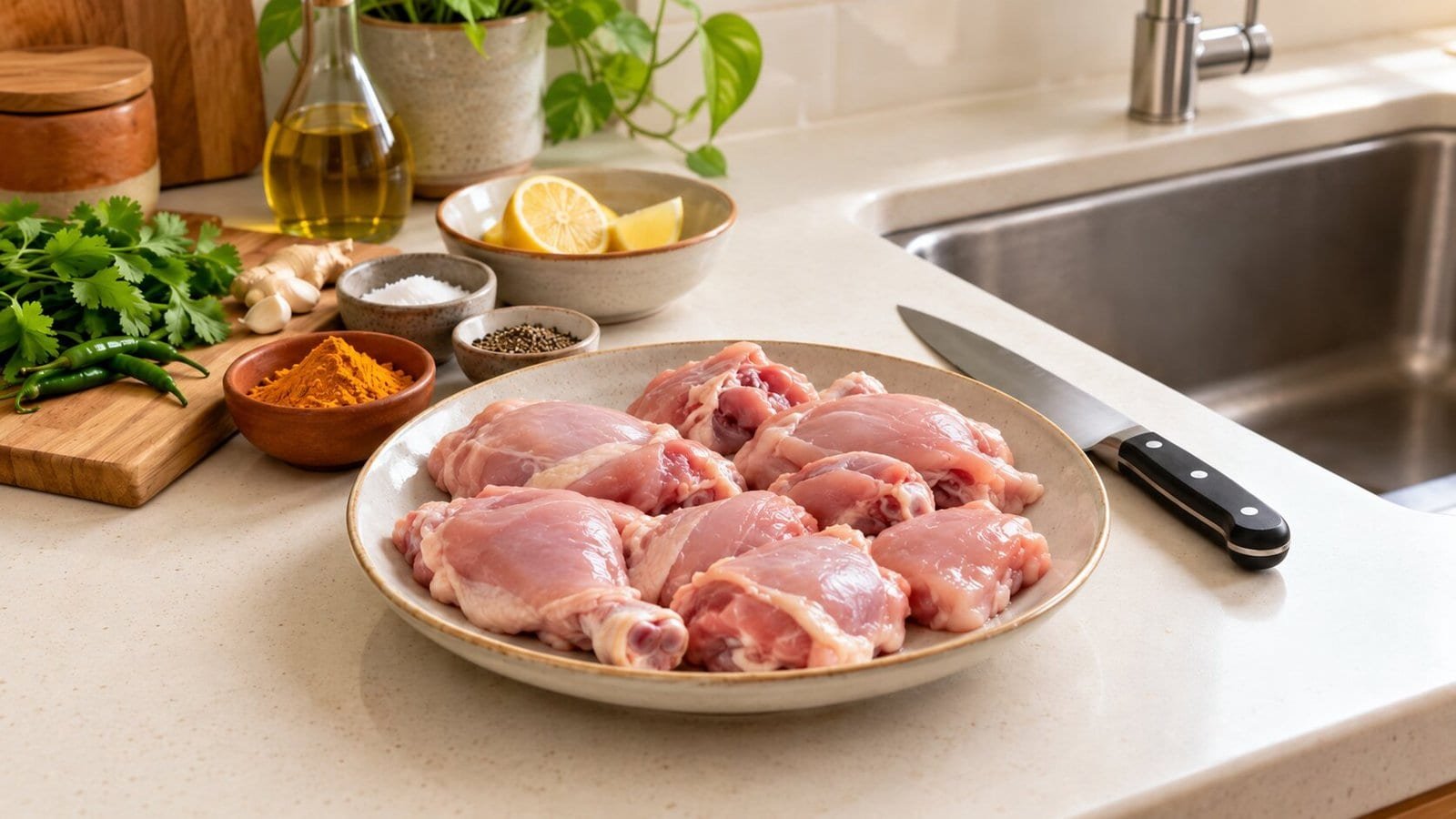
If washing chicken has always been part of how you prepare it, putting raw chicken straight into the pan can feel wrong.
But from a food-safety point of view, you do not need to wash raw chicken before cooking it.
The bigger concern is what happens at the sink. Water hitting raw chicken can splash droplets and raw juices onto the tap, counter, utensils or nearby food.
Washing may make the surface look cleaner to you, but it is not what makes the chicken safe to eat. Proper handling and thorough cooking do that.
Quick Overview
- You do not need to wash raw chicken before cooking it.
- Running water can splash raw chicken juices around the sink and nearby surfaces.
- Lemon, vinegar, salt or turmeric can be part of preparation, but they do not replace safe handling and cooking.
- Cook chicken to an internal temperature of at least 75°C and keep raw juices away from other foods.
Why Washing Chicken Doesn’t Make It Safer
Raw chicken can carry bacteria that you cannot see.
When you put it under running water, the water does not stay neatly on the chicken. Droplets can reach the sink, tap, counter, utensils or anything else close by.
You may not even notice where they landed.
That is why washing can create a cross-contamination problem. Instead of getting rid of the risk, you may move it from the chicken to other parts of the kitchen.
The USDA advises against washing raw poultry for this reason. Its guidance explains that some bacteria may remain attached to the meat, while others can be washed off and splashed onto nearby surfaces.
Indian guidance has raised the same concern about splashing. In advice issued during bird-flu concerns, FSSAI specifically warned against washing chicken under running water because the droplets could contaminate the surrounding area.
FSSAI published that advice in a specific bird-flu context, so it should be read that way. The warning about splashing, however, is the same practical kitchen problem highlighted in broader food-safety guidance.
Chicken can look perfectly clean and still carry harmful bacteria. A rinse cannot replace careful handling or proper cooking.
What About Lemon, Vinegar, Salt or Turmeric?
This is where food-safety advice can clash with familiar kitchen habits.
In many Indian kitchens, chicken may be rubbed or soaked with lemon, vinegar, salt, turmeric or a combination of these before cooking. That step is often described simply as “cleaning” the chicken.
Those ingredients can still have a place in your cooking.
Lemon and vinegar add acidity. Salt seasons the meat or can be part of a brine. Turmeric may be part of the marinade or the flavor of the dish.
Use them because they belong in the recipe, not because you expect them to make raw chicken safe.
USDA guidance specifically discusses practices such as rinsing or soaking meat and poultry with saltwater, vinegar or lemon juice. It still advises that washing is unnecessary for food safety because proper cooking is what destroys harmful bacteria.
So if lemon, salt, vinegar or turmeric is part of how you season or prepare the chicken, that is a cooking choice.
It still does not replace safe handling and thorough cooking.
What to Do Instead Before Cooking Chicken
You do not need a complicated cleaning routine.
Open the package carefully and keep the raw juices contained as much as you can.
Trim or portion the chicken with clean utensils, then move on to seasoning, marinating or cooking.
The same handling rules apply whether you are preparing breast, thigh, drumsticks or a mixed curry cut.
While you work:
- Keep raw chicken and its juices away from food that will be eaten without further cooking.
- Use a separate cutting board for raw chicken, or wash it thoroughly before using it for something else.
- Do not put cooked chicken back on a plate that held it raw unless the plate has been washed.
- Wash knives, boards, dishes and work surfaces after they touch raw chicken.
- Wash your hands well with soap and water after handling it.
- If raw chicken or its juices touch the sink, clean and sanitize the area afterward.
This lines up with FSSAI’s general meat-and-poultry guidance, which recommends separating raw poultry from other foods, using a separate cutting board and not placing cooked food back on an unwashed plate that held raw meat.
The idea is simple: keep raw chicken and its juices contained until whatever they touch can be cleaned or cooked.
What If You Still Choose to Wash Chicken?
You may still prefer to wash chicken because that is how you have always prepared it.
If you do, try to reduce the amount of splashing around the sink.
CDC guidance says that if you choose to wash raw chicken, use a gentle flow of water to limit splashing, then clean and sanitize the sink and surrounding area.
This is not a recommendation to wash chicken. It is a way to reduce the risk if you decide to do it anyway.
And do not look only at the sink afterward.
Droplets can reach the tap handle, counter, nearby utensils or containers. If they were close enough to be splashed, clean them too.
Cooking Is What Makes Chicken Safe
Whatever you do before the chicken reaches the pan, safety still comes down to proper cooking.
FSSAI’s meat-and-poultry guidance says meat and poultry should reach a safe minimum internal temperature of 75°C and recommends using a food thermometer because color and texture are not reliable indicators of safety.
Do not rely only on clear juices or the color of the meat.
Chicken can look different depending on the cut, marinade and cooking method.
For individual pieces, check the thickest part with the thermometer and avoid pressing the tip against bone.
For a whole chicken, check more than one thick area so you know the meat has reached the safe temperature where it matters.
Food Safety
Cook chicken to an internal temperature of at least 75°C. Use a food thermometer rather than relying only on color or clear juices.
You do not need to make raw chicken germ-free before it reaches the pan.
Keep its juices contained, clean what they touch, and let proper cooking do the job that actually makes the chicken safe to eat.