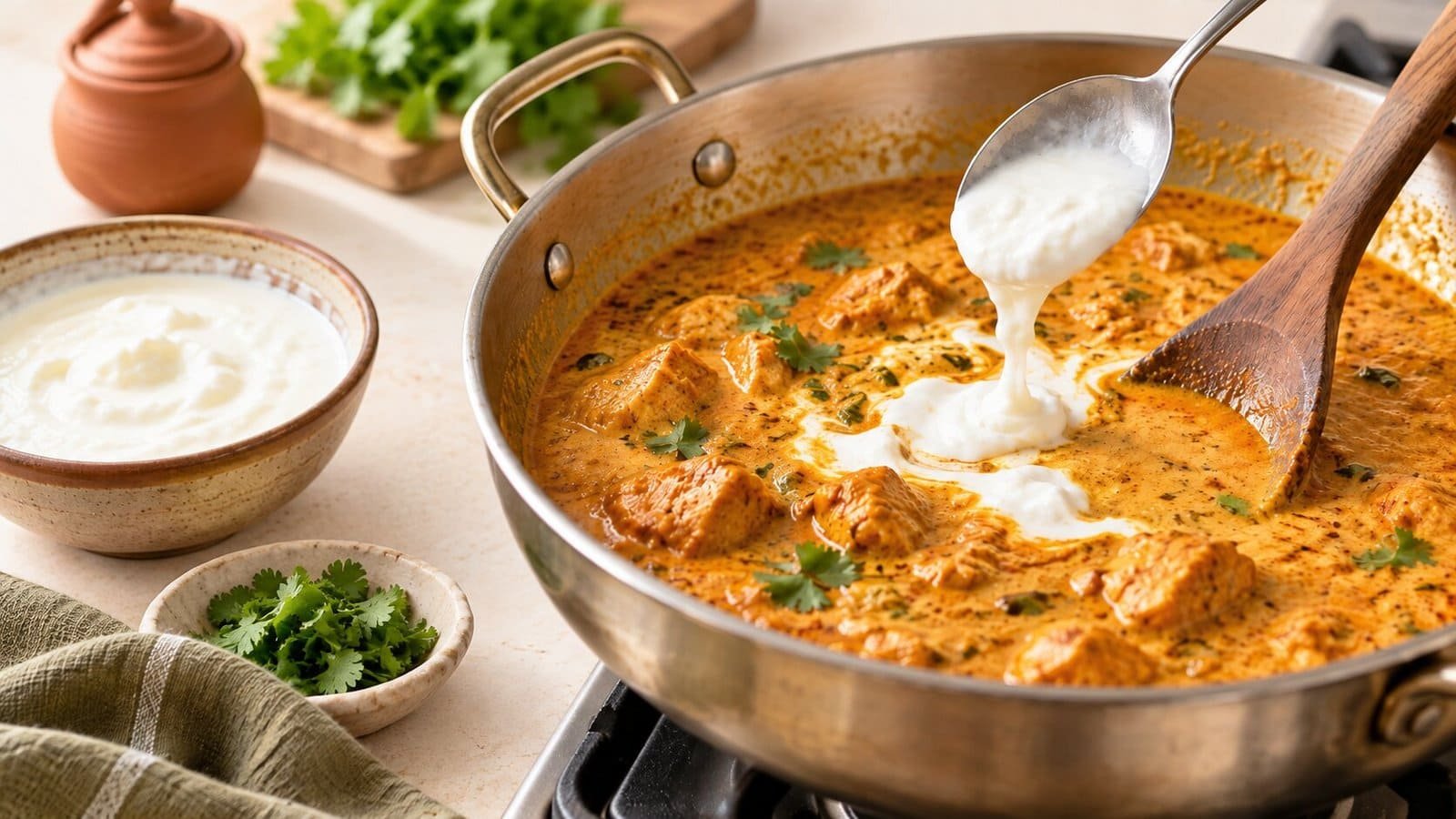
You add yogurt to the curry, give it a stir, and almost immediately the smooth sauce turns grainy. Small pale flecks appear, sometimes with thin liquid gathering around them.
The yogurt has split.
What you are seeing is the yogurt separating. Its proteins are clumping together, while some of the liquid they were holding is escaping.
Strong heat can make this more likely, but there is no single rule that works for every curry. The right way to add yogurt depends on what the yogurt is doing in the dish.
Quick Overview
- Lower the heat before adding yogurt unless the recipe uses a specific method for cooking it.
- Whisk it smooth and add it gradually rather than pouring it all in at once.
- The technique changes depending on whether yogurt is finishing the curry, cooking into the masala, or forming the sauce itself.
- If the yogurt splits, reduce the heat first. You may improve the texture, but you cannot always restore it completely.
Why Yogurt Splits in Curry
Yogurt looks smooth because its proteins and water are held together in a delicate structure.
When that structure starts to break down, the proteins gather into tiny curds and some of the liquid separates. In your curry, that shows up as a sauce that suddenly looks grainy, speckled or watery.
Both heat and acidity affect the structure of yogurt. Research into how milk proteins form yogurt gels helps explain why changes in temperature and pH can affect the way those proteins hold together.
For you at the stove, the useful part is simpler: yogurt does not always handle sudden, intense heat well.
Letting cold yogurt lose some of its refrigerator chill may make it easier to mix into a hot sauce, but room-temperature yogurt is not a magic fix. A very hot pan can still split it.
The Right Method Depends on How the Yogurt Is Used
This is why yogurt advice can seem contradictory.
One recipe tells you to switch off the heat before adding it. Another stirs yogurt into the masala and keeps cooking. A kadhi recipe may cook a yogurt-based sauce for much longer.
All three can work. They are simply using yogurt in different ways.
When Yogurt Goes In Near the End
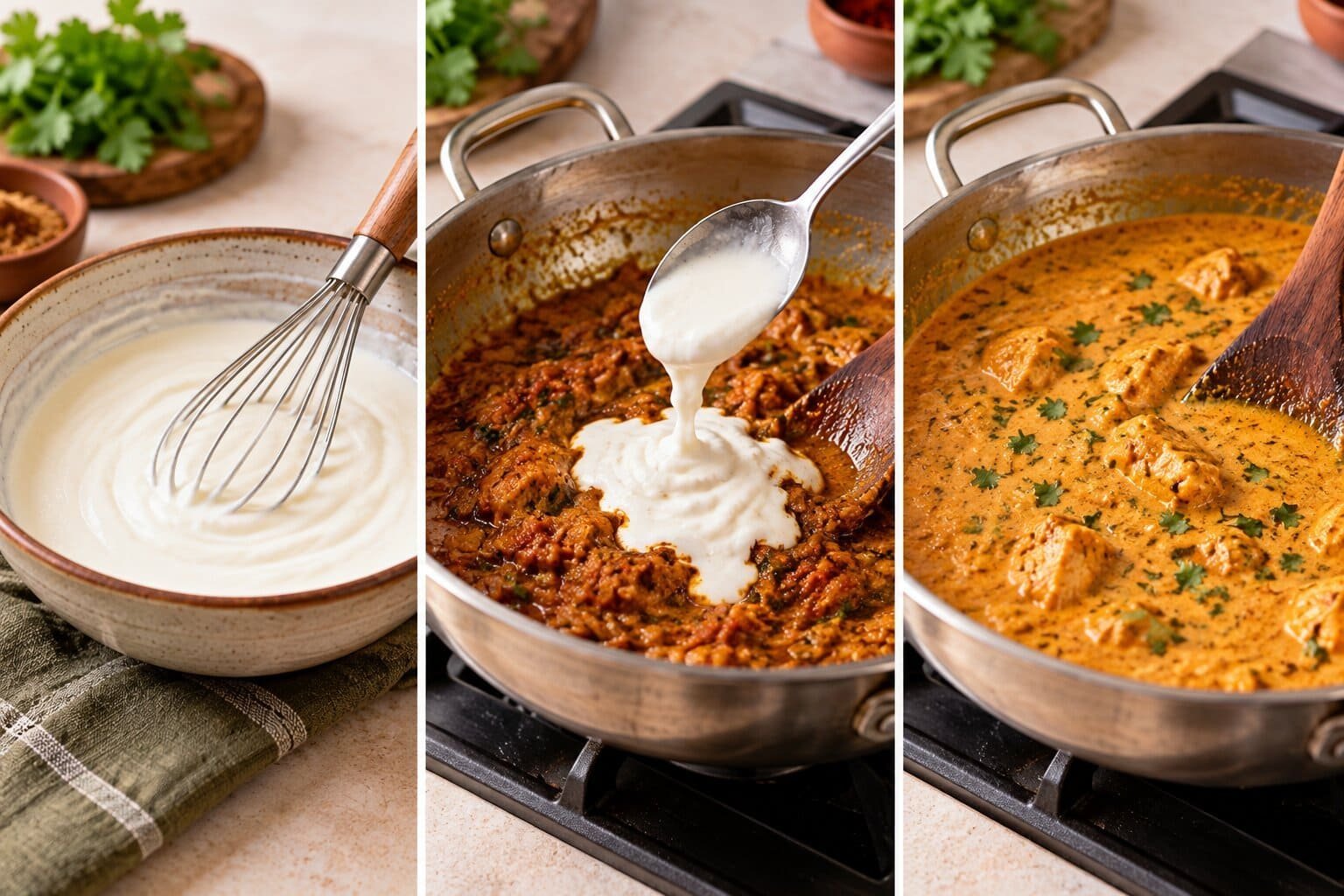
If the yogurt is being added near the end for tang or creaminess, this is the time to be gentle with the heat.
Lower the heat or move the pan off the burner. Whisk the yogurt first so you are not trying to break up lumps once it reaches the curry.
If the sauce is very hot, tempering can help. Mix a spoonful of warm curry into the yogurt, stir until smooth, then add another spoonful. Once the yogurt has warmed gradually, stir it back into the pan.
If the curry needs more heat afterward, warm it gently rather than taking it straight back to a hard boil.
When Yogurt Is Cooked Into the Masala
Some curries use yogurt as part of the masala itself.
Here, add it a little at a time.
Lower the heat, stir in a small amount, and wait until it has blended into the masala before adding more.
This gives the yogurt a chance to become part of the sauce instead of meeting a very hot pan all at once.
Once it is incorporated, carry on with the cooking method the dish calls for.
When Yogurt Forms the Curry Base
Kadhi works differently again.
Yogurt forms much of the sauce and is commonly mixed with water and besan before cooking. The besan thickens the mixture and gives kadhi the texture you expect.
That is very different from stirring a few spoonfuls of plain yogurt into an already-hot curry.
So the familiar advice to “never cook yogurt for long” does not work as a rule for every Indian dish.
If Your Recipe Just Says “Add Yogurt”
When the recipe gives you no special method, keep it simple:
Whisk the yogurt smooth, lower the heat, and add it in small amounts while stirring. Let each addition disappear into the sauce before adding more.
If the pan is extremely hot, take it off the burner briefly before you start.
A Quick Way to Choose the Method
| How the yogurt is being used | What to do |
|---|---|
| Added near the end | Lower or switch off the heat. Temper first if the sauce is very hot. |
| Cooked into the masala | Add gradually while stirring so each portion blends in. |
| Main sauce base | Follow the dish-specific method. Ingredients such as besan may already be part of the sauce. |
Which Yogurt Should You Use?
For most curries, start with plain, unsweetened yogurt.
You do not need to hunt for a special yogurt that supposedly cannot split. How you handle it in the pan matters more.
Full-Fat vs Lower-Fat Yogurt
Full-fat yogurt gives you a richer sauce, but it is not a guarantee against splitting.
Lower-fat yogurt can work too.
Whichever you choose, pay more attention to the heat and how the yogurt goes into the sauce than to the fat percentage on the tub.
Regular vs Greek Yogurt
Both can work. The difference you will notice first is thickness.
Regular yogurt is usually looser. Greek yogurt is more concentrated and can be quite thick, depending on the brand.
If your Greek yogurt feels too thick for the curry, whisk it first. You can loosen it with a little water or some warm sauce if needed.
For many Indian dishes, smooth plain dahi is a straightforward choice when that is what the recipe expects.
What About Tomatoes, Lemon and Other Acidic Ingredients?
Tomato and yogurt can work perfectly well in the same curry. So can yogurt and lemon.
The issue is not that these ingredients must never meet.
An already-acidic sauce simply gives yogurt a little less room for error. Yogurt itself is acidic, and changes in pH affect the way its milk proteins hold together.
If a recipe is designed to use both tomato and yogurt, there is no reason to remove the tomato. Follow the intended order and keep an eye on the heat when the yogurt goes in.
The same goes for lemon. If it is there to brighten the finished curry, add it when the recipe calls for it rather than boiling it hard with the yogurt for no reason.
When Besan or Starch Helps
Besan belongs in kadhi because it is part of the sauce, not because every yogurt curry needs protection from curdling.
It thickens the yogurt-water mixture and gives the finished dish more body.
Starches can also help yogurt mixtures hold onto water and become thicker. Research into yogurt separation has found that added starch can increase viscosity and reduce whey separation, although the effect depends on the type and amount of starch used.
An ordinary curry is another matter.
Adding cornflour, flour or another starch will change the texture of the sauce. Use one when it belongs in the dish rather than treating it as insurance every time yogurt appears in a recipe.
Watch the Sauce, Not Just the Heat Setting
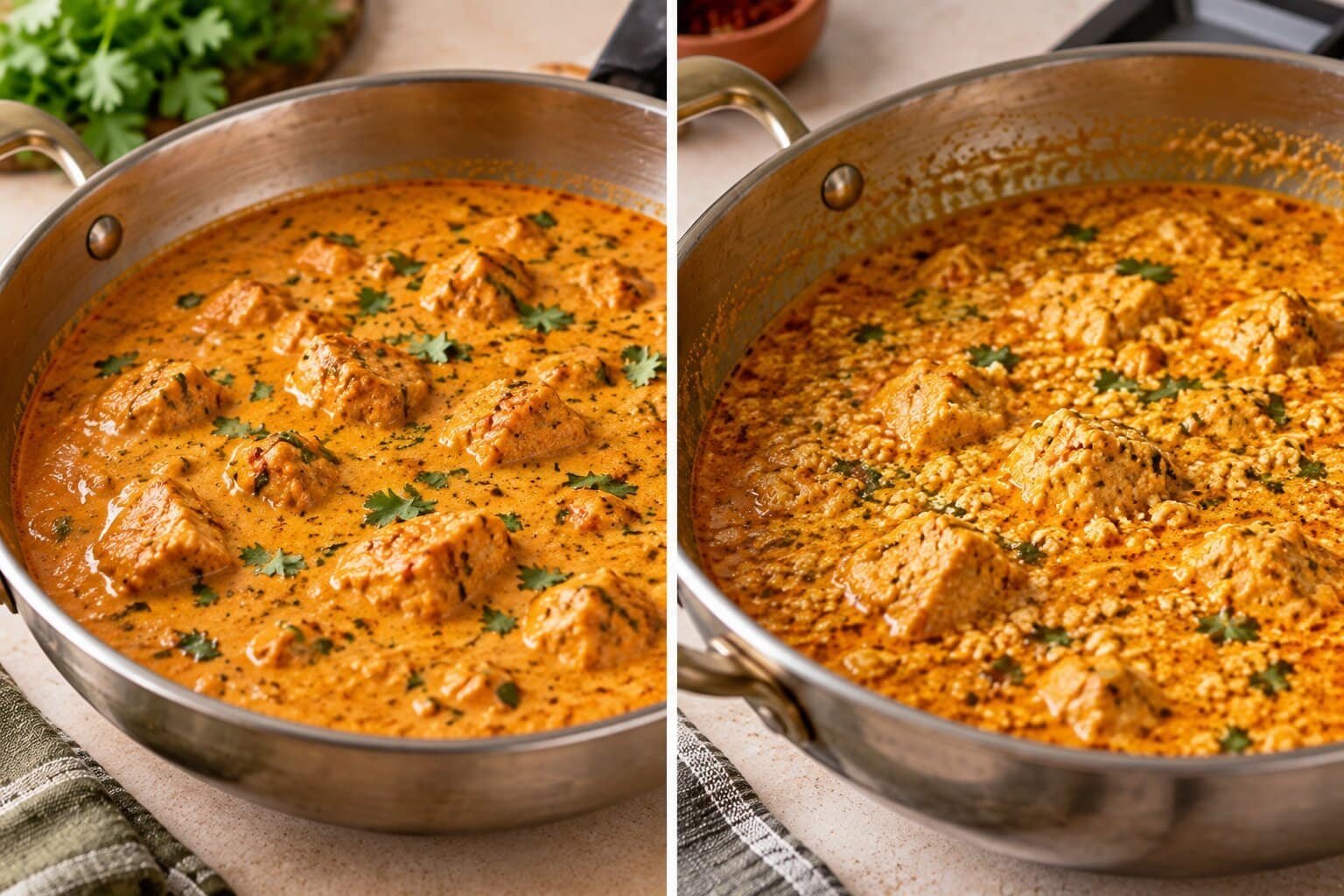
“Cook on low” is useful advice, but your stove’s low setting cannot tell you exactly what is happening in the pan.
Watch the sauce instead.
Good signs include:
- the yogurt blends into the masala as you stir
- pale streaks disappear instead of turning into coarse flecks
- the sauce stays creamy rather than suddenly releasing thin liquid
- the pan is gently hot instead of boiling hard while the yogurt is going in
A few pale streaks just after you add the yogurt are not necessarily a problem. Give them a moment to blend.
What you want to catch is the change from smooth and creamy to distinctly grainy and separated.
Oil Separation Is Not the Same as Yogurt Splitting
Oil appearing around a cooked masala is not automatically a sign that the yogurt has curdled.
As a masala cooks down, water evaporates and you may start to see oil glistening around the edges. In dishes where the masala is deliberately cooked down, that can be a normal part of the process.
Split yogurt looks different.
The sauce becomes grainy or clumpy, and you may see thinner watery liquid separating around the curds.
So if you see something separating in the pan, look at what is separating. Clear oil around a thick masala and watery liquid around grainy yogurt are not the same thing.
Note
Oil glistening around a cooked-down masala can be normal. Yogurt splitting usually looks grainy, with curds and watery separation.
If the Yogurt Has Already Split
If the sauce starts turning grainy, turn the heat down or move the pan off the burner.
If it has only just started to separate, gentle stirring or whisking may smooth it out enough to improve the texture.
If the curry is already noticeably grainy, you still have options.
For a curry where the sauce can be blended, remove any chicken, paneer or vegetables you want to keep intact. Blend the liquid portion until it looks smoother, then return the solids to the pan.
It may look better, but it might not return to exactly the texture you had before the yogurt split.
And that is okay from a cooking point of view. A split curry can still taste good even when the sauce is not as smooth as you wanted.
Once the texture has changed, focus on making it better rather than trying to make every curdled sauce perfectly creamy again.